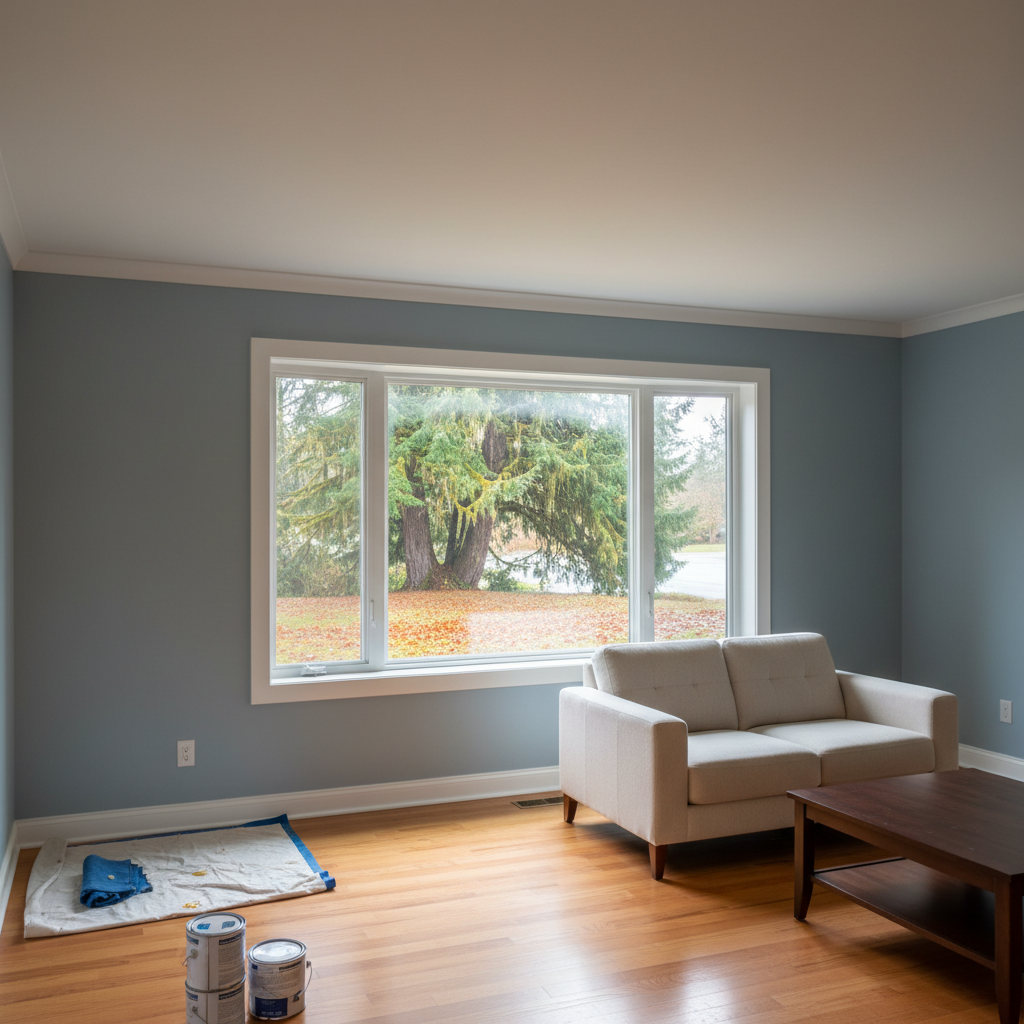
You're standing in your living room, maybe the kitchen, and thinking, "Time for a fresh coat." Good call! Interior painting really can change a whole space. But here in Spanaway, even when you're painting inside, our unique climate still plays a role in how your paint performs and when you should actually tackle that project.
When to Schedule Your Interior Paint Job
Most folks figure interior painting is a year-round thing. And technically, it is. You're not fighting rain or direct sun on your walls, right? But for the best results, especially if you're a homeowner doing it yourself, or even if you're hiring someone like us, some times are just better than others.
I've been painting homes around here for years. That includes plenty in the older, established neighborhoods near Sprinker Recreation Center. What I've found is that the shoulder seasons are often perfect. Think late spring (April-May) and early fall (September-October).
- Late Spring: The air starts to dry out a bit, but it's not too hot yet. You can open windows for ventilation without freezing or letting in a ton of pollen. Plus, you're usually done before summer's peak humidity really kicks in.
- Early Fall: Just like spring, the air feels crisp, and humidity levels are generally lower than in mid-summer. It's a great time to get things done before the really wet, cold weather settles in for good.
Summer can work, sure, but if it's a particularly humid summer, you'll need to be extra careful with drying times. Winter? Well, you *can* paint. But you're probably keeping windows shut tight, which means less ventilation and potentially longer cure times for your paint. More on that in a bit.
How Spanaway Weather Affects Interior Painting
You might be thinking, "It's inside, who cares about the weather?" But trust me, our Pacific Northwest climate — especially the dampness we get — really does matter.
Humidity is the Big One
Our long, wet winters and often damp springs mean higher humidity. When you're painting inside, high humidity slows down the drying and curing process of the paint. Paint dries in two stages: first, the water or solvent evaporates (that's drying), then the paint film hardens completely (that's curing). If the air is thick with moisture, that first step just takes longer. This can lead to a few headaches:
- Longer wait times between coats: You might think it's dry to the touch, but if you rush it, you could pull off the previous coat or end up with an uneven finish.
- Poor adhesion: Paint needs to bond properly to the surface. If it's constantly battling moisture, that bond won't be as strong as it should be.
- Mildew growth (in extreme cases): If you're painting a high-moisture area like a bathroom that isn't properly ventilated, and the paint can't dry out, you might be setting yourself up for mildew issues down the road. Nobody wants that.
Ventilation is Your Friend
This connects directly to humidity. No matter the season, good ventilation is crucial. Open windows and doors (when you can), use fans, and make sure air is moving. This helps evaporate the moisture from the paint and gets rid of those paint fumes. Even in winter, crack a window a bit if you can, and use a fan to pull air through.
Temperature Matters Too
While we don't often see extreme interior temperatures, very cold or very hot conditions can impact paint. Too cold, and the paint gets thick and doesn't flow well. Too hot, and it can dry too fast on the surface, leading to brush marks or an uneven finish, especially with latex paints.
Aim for that sweet spot: 60-80 degrees Fahrenheit. If your home's interior stays consistently in that range, you're golden.
Protecting Your Investment Year-Round
Once your beautiful new paint job is done, you want it to last, right? Here's how to protect it, keeping our local conditions in mind:
- Maintain proper humidity levels: If you have a dehumidifier, especially in basements or lower levels, use it during our wet seasons. Keeping indoor humidity between 30-50% is ideal for your paint and your home's structure.
- Clean gently: When you need to clean your walls, use a soft cloth and mild soap (like dish soap) diluted in water. Don't use harsh abrasives or chemicals, especially not on fresh paint.
- Address moisture issues promptly: See a leak? Notice condensation? Get it fixed. Water damage is the enemy of any paint job, interior or exterior.
- Touch-ups are okay: Don't be afraid to do small touch-ups if you get a scuff or ding. It's much easier to blend in a small area than to repaint an entire wall. Just make sure you saved some of the original paint!
Getting your interior paint job right in Spanaway means understanding how our local climate affects the process. It's not just about picking the right color; it's about giving that paint the best chance to dry and cure properly. Do that, and you'll enjoy beautiful, long-lasting results. And if you ever need a hand, or just some advice, Charis Painting Inc. is always here to help fellow homeowners.